
SUV Camping Checklist: Everything You Need Before You Hit the Trail
Updated: Aug 10
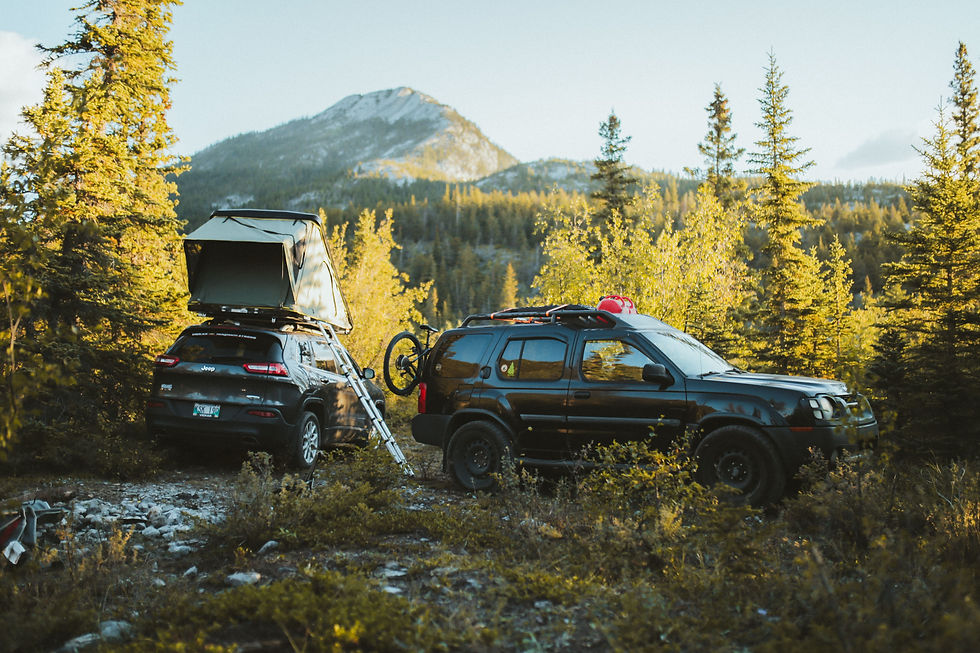
SUV camping is a way to get outdoors without making things too complicated. You already have the vehicle, you know how to drive it, and with the stuff and a little preparation your SUV can be a great basecamp. It can take you deeper into the backcountry than a car. Whether you are going to a National Forest or a campground, getting ready is just as important as the gear you bring.
This checklist has everything you need to think about before you leave your driveway. It covers vehicle checks, camp gear and what to do when you get home.

Vehicle Prep: The Important Step People Skip
Before you load anything, your vehicle needs to be ready. A lot of people skip this step, then get stuck on a forest road. If you are going remote, you need to check your vehicle. If your SUV has been sitting for a while, get it serviced before the trip.
Check your tire pressure and tread depth. Letting some air out can help on dirt or sand.
Make sure your oil, coolant, brake fluid and windshield washer fluid are all full.
Check your tires, jack and lug wrench. Make sure the spare is inflated.
Check your brakes. If they are making noise or pulling to one side, get them fixed.
Check your battery. An old battery might not start your car in the cold.
It sounds like a lot but it really isn't. Most of these take five minutes to check. The ones that don't are the ones worth knowing about before you leave, not after you're stuck on a trail at 7pm with no signal. Spending thirty minutes at home saves you hours on the side of a forest road with no cell service and no one coming to help anytime soon.
Sleep and Shelter Setup for SUV Camping
One of the things about SUV camping is that you can bring comfortable sleep gear. The best SUV for camping is one with room to lay flat. You can fold down the seats in most mid-size and full-size SUVs.
Get a sleeping pad or inflatable mattress. Measure your cargo area first.
Get a sleeping bag that's warm enough for the coldest night.
Get window covers or sunshades for privacy and to keep cool.
Get a fan or ventilation solution if you are camping in warm weather. Condensation builds up fast in a closed vehicle.
Get a tarp or canopy for shade and rain coverage.
A lot of first timers skip the window covers and regret it. You don't sleep well when it's bright at 5am or when strangers can see right into your car. They're cheap and they make a big difference. Same goes for ventilation. A stuffy car at elevation in the middle of the night is not comfortable.

Cooking, Food and Water
You need to bring more than snacks. If you are going out for more than a night you need a good food and water system.
Get a portable camp stove and fuel.
Get a cooler with ice or a 12V electric cooler.
Bring water containers. You need at least one gallon per person per day.
Bring a water filter or purification tablets.
Bring cooking utensils, a cutting board and biodegradable soap.
Bring a bear canister or hanging system if you are in bear country.
One thing people forget is a way to wash dishes. Biodegradable soap, a small basin and a sponge doesn't take up much space. Eating off a dirty pan two days in isn't fun and you can't just rinse things in a stream near a campsite.
Navigation, Safety and Emergency Gear
This is the part that separates campers from those who need to be rescued. Cell service can be bad. Forest roads can be confusing.
Download offline maps for the area.
Bring a physical map as a backup.
Get a satellite communicator if you are going somewhere remote.
Bring a first aid kit with blister treatment and personal medications.
Bring recovery gear like tow straps and a hi-lift jack.
Bring headlamps, a fire extinguisher and a multi-tool.
Clothing, Comfort and the Extras
The weather in the backcountry can change fast. You need to pack for the worst case, not just the forecast.
Bring a base layer, mid layer fleece and an outer shell.
Bring hiking boots and camp sandals.
Bring a camp chair and a small folding table.
Bring sunscreen, bug repellent and a hat.
Bring trash bags. Pack out everything you bring in.
After the Trip: Take Care of Your SUV
Most people just drive their dirty SUV all week after a trip. Trail dust and mud can hurt your vehicle's paint and finish.
A good wash after a camping trip can help. You need to clean the undercarriage, wheel wells and door jambs. If your SUV is really dirty or has tree sap, tar or baked-on trail grime, a mobile detailing service can come to you and sort it out without you having to drive anywhere.
It's one of those things that doesn't feel urgent until you notice the paint looking dull or the door hinges starting to creak from all the grit. Stay on top of it and the vehicle will last a lot longer.
One Last Thing Before You Go
Tell someone your plans before you leave. Share your route. Give a return time to a friend or family member. If you are not back on time, they can call for help.
A lot of people think this is overkill. It isn't. It takes two minutes and it's the one thing that actually saves people when things go wrong out there. Write it down, send a text, drop a pin. Any of those works. Just make sure somebody knows where you went and when to expect you back.
SUV camping is great for people who are prepared. Your vehicle can take you to places a regular car can't. You just need to bring the right gear, check your basics and take care of your vehicle before and after. Do those things and you will have a great trip.
About the Author
Zane Kazima is the Marketing Head at Mobile Detailing Expert, a national mobile detailing company serving 80+ cities across the US. With hands-on experience in vehicle care and a passion for the outdoors, Zane writes about keeping your vehicle in top shape whether you're on the highway or the trail.


Comments